Your Digital Wallet Saw the Fraud Coming. Your Bank Did Not.
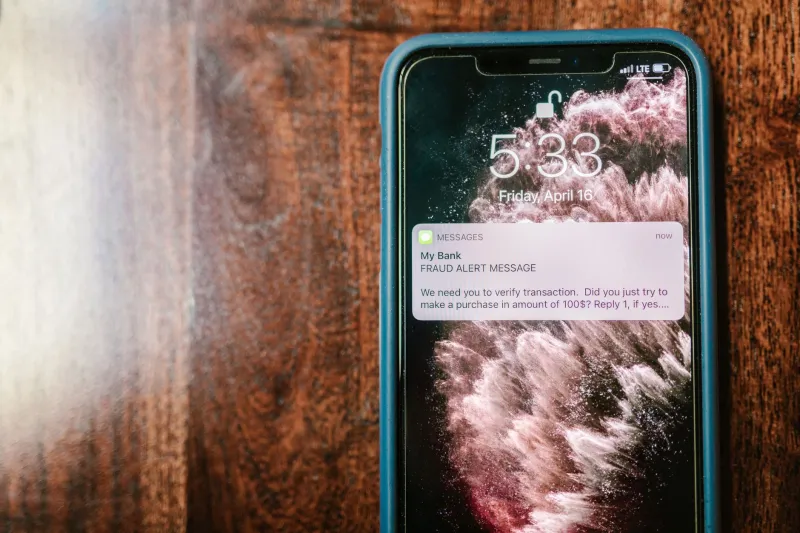
For decades, the conventional wisdom held that legacy banks were the safest place to keep your money. Their vaults were impenetrable, their fraud departments well-staffed, and their reputations built on generations of institutional trust. But trust, it turns out, is not the same as speed — and in the world of financial fraud, speed is everything.
A growing body of evidence suggests that digital wallets are now detecting fraudulent activity faster, and with greater precision, than many traditional banking institutions. The reason has less to do with resources and more to do with architecture: how these platforms are built, what data they collect, and how quickly they act on it.
The Anatomy of a Fraud Alert
When a transaction runs through a digital wallet, it does not simply move money from one account to another. It generates a data point — one that sits alongside hundreds of others associated with your account. The platform registers the merchant category, the geographic location, the time of day, the device used to authorize the payment, and how that combination compares to your established spending patterns.
If you typically buy groceries in suburban Ohio on Saturday mornings and a charge suddenly appears from a luxury retailer in Miami on a Tuesday evening, a well-designed digital wallet does not wait for the end of the month to flag it. It flags it within seconds.
Traditional banks, by contrast, often rely on batch-processing systems that were designed before smartphones existed. Fraud detection in those environments can operate on a delay — sometimes hours, sometimes longer. By the time a bank's overnight system identifies an anomaly, a fraudster may have already completed multiple transactions.
Real Accounts, Real Consequences
Consider the experience of a small business owner in Atlanta who used both a legacy checking account and a digital wallet for day-to-day expenses. When her debit card information was compromised at a point-of-sale terminal, her digital wallet sent her a push notification within minutes of an unauthorized charge appearing — a charge that occurred in a city she had never visited. Her bank, which held a linked account, did not contact her until two days later, by which point three additional charges had cleared.
This scenario is not isolated. Consumer finance forums across the United States are populated with similar accounts: users who received real-time alerts from their digital wallets while their banks remained silent, or who discovered discrepancies through a wallet's transaction history before a bank statement arrived.
The disparity is not merely anecdotal. It reflects a structural difference in how these two types of institutions process and respond to financial data.
Pattern Recognition as a Financial Tool
What makes modern digital wallets particularly effective at fraud detection is their capacity for behavioral modeling. Over time, the platform learns what normal looks like for you — not in a general demographic sense, but in a highly individualized one.
Your spending patterns are as distinct as a fingerprint. You might consistently fill your gas tank at the same two stations, order from the same handful of delivery apps, and make international purchases only during specific months of the year. A digital wallet that has processed six months of your transactions has a sophisticated baseline against which every new charge is measured.
When a transaction deviates from that baseline — whether in amount, location, merchant type, or timing — the system does not need a human analyst to notice. The algorithm surfaces the anomaly automatically and, in many cases, prompts you to confirm or dispute the charge before it fully settles.
This is a meaningful distinction from the fraud detection model employed by many banks, which often relies on thresholds rather than personalization. A charge over a certain dollar amount might trigger a review; a charge that simply does not fit your behavioral profile might not.
Transparency as a Security Feature
One underappreciated element of digital wallet security is transparency itself. Many fintech platforms provide users with a granular, searchable record of every transaction — categorized, time-stamped, and accessible at any moment. This level of visibility transforms account holders into active participants in their own financial security.
When you can see exactly what cleared your account, when it cleared, and from which device the authorization originated, you are far better positioned to identify something that does not belong. Traditional bank statements, particularly paper ones, compress this information in ways that can obscure suspicious patterns. A digital wallet surfaces it.
Some platforms go further, offering weekly or monthly spending summaries that make irregular charges visually apparent. A fraudulent subscription that might disappear into the noise of a crowded bank statement becomes conspicuous when it appears as an outlier in a categorized spending breakdown.
The Limits of Algorithmic Vigilance
It would be misleading to suggest that digital wallets are infallible. Sophisticated fraud operations have adapted to behavioral modeling, and no algorithm catches everything. Social engineering attacks — where a fraudster manipulates the account holder directly rather than circumventing the platform's security — remain a persistent vulnerability regardless of how advanced the underlying technology is.
Additionally, the quality of fraud detection varies considerably across digital wallet providers. Not every fintech platform has invested equally in machine learning infrastructure, and some consumer-facing wallets offer little more than basic transaction logging. The presence of a mobile app does not, by itself, guarantee superior fraud protection.
Consumers should evaluate digital wallet providers with the same scrutiny they would apply to any financial institution — examining the platform's alert capabilities, dispute resolution processes, and the clarity of its data practices before committing their financial activity to it.
What Better Looks Like
The broader implication of this technological gap is not simply that digital wallets are catching up to banks — in certain respects, they have moved ahead. The real-time, personalized, transparent model of financial monitoring that modern platforms provide represents a meaningful improvement in how ordinary Americans can protect themselves from fraud.
For consumers accustomed to discovering problems after the fact, the shift toward proactive, behavioral fraud detection is a substantive change in the relationship between a financial platform and its users. It transforms the platform from a passive record-keeper into an active partner in financial security.
At SaltPay, this principle is foundational. A digital wallet that merely stores your money is not doing its job. One that watches over your transactions, learns your patterns, and alerts you the moment something looks wrong — that is what total control over your finances actually means.
Fraud does not wait for a convenient moment. Neither should your financial platform.